small batches
3D printing for small batches
From 1 part to a few hundred, with no mould to pay off: send the file (or we design it for you) and get finished parts in 1-7 days.
Marcello BilliAugust 18, 20267 min
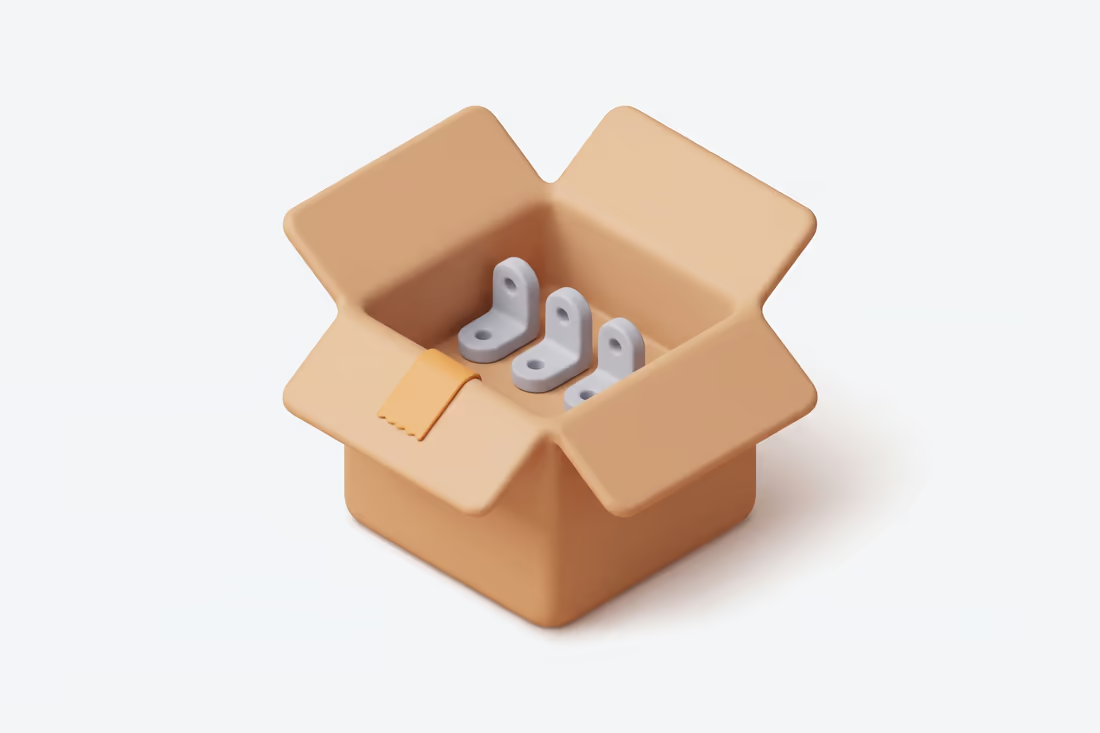
Outsourced 3D printing means handing production of custom parts to a service instead of printing them yourself: you upload the 3D file (or we design it from a sample), choose material, finish and quantity, and receive the finished parts. It makes sense from one part to a few hundred — exactly the range where buying a printer or tooling a mould doesn't add up. You pay per part, with no upfront investment and no machine, materials or failed prints to manage.
In short
- Outsourcing = made-to-order production: you send the file or a sample, the service prints and ships.
- No minimum order: it starts from 1 part. That's the edge over moulding, which needs high volumes.
- For small batches 3D printing beats moulding: no €2,000-100,000 mould to amortise.
- Typical lead time 1-7 days versus the weeks of moulding (which has to build the mould first).
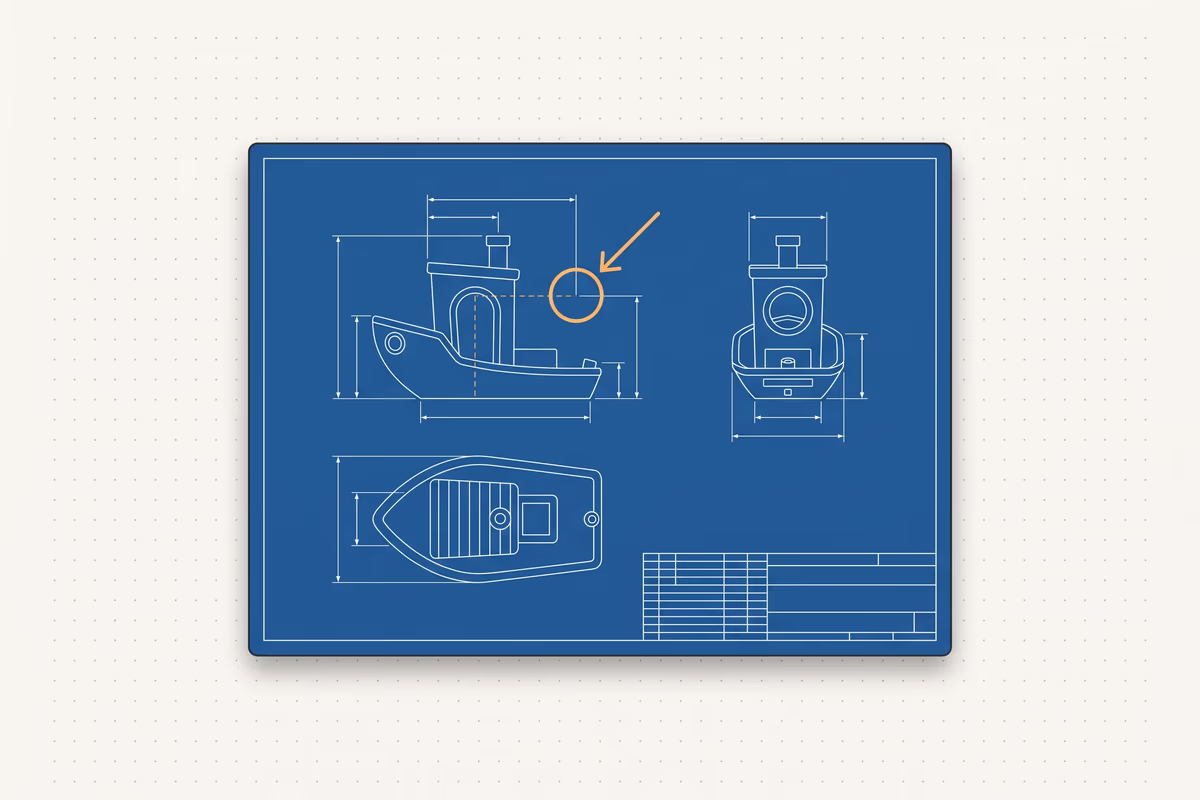
- Custom parts even without a 3D file: a drawing, measurements or a sample are enough — we redraw it.
What is an outsourced 3D printing service?
Outsourcing means someone else does the manufacturing for you. In 3D printing that translates into a simple path: you send a 3D model (or the part to copy), the service prints it in the right material and delivers parts ready to use. You don't buy the printer, don't learn to run it, don't manage spools, calibration and failed prints. It's made-to-order production: parts get made when they're needed, in the quantity that's needed.
It's the right model for anyone who needs a few technical parts done well: a spare part, a functional prototype, a custom bracket, a short run of components for a product. It's no coincidence the market is pushing exactly here: according to the Wohlers Report 2026, additive manufacturing is worth $24.2 billion and printing services are now its largest segment, with growth driven by production of real parts, no longer just prototypes.
How it works, from file to finished part
The path is the same whether you have a ready CAD drawing or just a broken part in your hand. The technical side is handled by the service.
- Send the file or the sample. Upload the model (STL, STEP, OBJ or 3MF) to the instant quote. If you don't have a 3D file, send photos, caliper measurements or the physical part: we redraw it in CAD.
- Choose material, finish and quantity. Tell us where the part works (heat, sunlight, load, chemicals) and how many you need. If you're unsure, we'll recommend the material.
- Get your quote. With the file ready, the price is instant. On complex files we run a technical check within 24 hours.
- Approve and, if needed, test a sample. On critical fits and larger batches it pays to print one test part before launching the whole run.
- Production and inspection. The batch runs with identical settings for every copy, so the parts come out repeatable.
- Shipping. You receive the finished parts, and the file stays yours: for future copies just reorder.
When does outsourcing beat buying your own printer?
It depends on how much you print, and the threshold is higher than people think: below a few dozen parts a month, owning a printer doesn't pay for itself once you count calibration, failed prints and above all your own time, which is the real cost. If you order less than that, outsourcing wins almost every time: zero upfront investment, zero learning curve. The full reasoning, numbers in hand, is in the guide on how much 3D printing costs.
There are also three cases where a service wins regardless of volume: technical materials (carbon composites, high temperatures) that a hobby machine can't handle, the repeatable quality a batch demands, and large formats a desktop build plate can't cover. You're buying the result, not the equipment.
3D printing service, CNC or injection moulding: which wins at which quantity?
For a small batch the real question is which process costs less at your quantity. 3D printing has no tooling, so it starts ahead at low numbers; injection moulding carries a high fixed cost (the mould) that only pays back at high volumes.
In that Formlabs comparison (2024), at 1,000 parts outsourced moulding cost $3,920 against $600 for 3D printing, because the mould for that part alone was worth $3,600. The mould is no small detail: according to Protolabs Network, a simple mould costs a few thousand euros, a complex one from tens of thousands to over a hundred thousand. All to be amortised before the first good part even exists.
| Criterion | 3D printing (FDM) | CNC | Injection moulding |
|---|---|---|---|
| Ideal volume | from 1 to a few hundred parts | 1-100+ parts | thousands of parts |
| Tooling | none | no mould | mould €2,000-100,000 |
| Cost per part | constant | medium-high | very low, only at high volumes |
| Lead time | 1-7 days | 1 day - 2 weeks | weeks (mould included) |
| Geometries | complex, hollow, internal | limits on undercuts | constrained by draft angles |
| When to choose it | small batches, custom parts, functional prototypes | metal, high precision | large repeated volumes |
Timing matters as much as cost. For finished parts, Protolabs indicates around 1-7 days for 3D printing, while moulding first has to absorb mould construction, which takes weeks. For a small batch you need now, an outsourced 3D printing service is the fastest route.
How much does a small batch cost?
You pay the sum of the parts, with no inflated fixed costs and no minimum order. The unit price depends on volume, weight, material and print settings — the same parameters covered in detail in how much 3D printing costs: as a reference point, a small part in PLA or PETG (a bracket of ~50 g) sits in the €5-12 range. Across a batch the total usually improves a little: file preparation (review, orientation, slicing) is done once and spread over all the parts, and the copies print in sequence, filling the build plate more efficiently.
Two things bring a batch price down, and both are decided upstream, at the design stage: hollowing out solid sections with a medium infill and orienting the part to reduce supports. Over dozens of copies, every minute of print time saved on one part is multiplied by the quantity.
Custom parts: an idea, a drawing or a sample is enough
Outsourcing doesn't necessarily mean having a CAD file ready. If all you have is an idea, a technical drawing or a part to replicate, we do the modelling: from the physical sample or dimensioned photos we rebuild the solid in CAD and then print it. It's the same route described for discontinued spare parts, and the right path for a brand-new component designed from scratch too. Go to the quote and pick the design flow: we take care of the model, you approve the preview before printing.
Materials and repeatable quality
Outsourced production gives you access to the full technical range, not just PLA: PETG and ABS for light mechanical work, ASA for outdoor use and sunlight, nylon and carbon-fibre composites for load and heat, TPU for flexible parts. The material is chosen based on the part's real use, not the price of the filament; which one fits each case is in the guide on which material to choose, with datasheets and prices in the materials guide. The full offering, from printing to design, is on the services page.
Across a batch, repeatability is guaranteed by the digital process: same machine, same material, same settings, so every copy starts from the same file and comes out identical to the others within process tolerances (around 0.2-0.3 mm in FDM). On critical fits, you dial in the fit with one test part before launching the whole run.
How to start your outsourced production
Already have the 3D file? Upload it to the instant quote: you see the price in seconds, for one part or a hundred. No file? Send photos, measurements or the sample and we'll redraw it. On more complex jobs we run a technical check within 24 hours, and the person replying is the technician who will actually print your parts. We work pay-per-part: you only pay for the parts you order, with no minimum order.
MB
Marcello Billi — technical lead ForgeCore
Small batches on the machines every week, from spare parts to pre-series: if you're not sure your part makes sense, write to me.
Upd. 08.20.2026
Frequently asked questions
What is an outsourced 3D printing service?
It means having your parts produced by an external service instead of printing them yourself: you send the 3D file (or have the service design it), choose material, finish and quantity, and receive finished parts ready to use. You pay per part, without buying a printer or dealing with calibration, failed prints and materials.
Is there a minimum order quantity?
No — you can order a single part. 3D printing has no tooling costs like moulding does, so a serious service will produce one part or a handful of copies with no minimum order. That's exactly its advantage over injection moulding, which needs high volumes to pay back the mould.
Is 3D printing or injection moulding better for a small batch?
For small batches, 3D printing almost always wins. Moulding requires a mould that costs from a few thousand euros to over a hundred thousand for the most complex ones, and only pays off at high volumes. In a 2024 Formlabs test the break-even point was around 13,000 parts: below that threshold 3D printing was cheaper. For tens or hundreds of parts it's not even close.
How much does a small batch of 3D printed parts cost?
You pay the sum of the parts, with no inflated fixed costs. The unit price depends on volume, weight, material and print settings; across a batch it often drops a little, because file preparation is done once and the copies print in sequence. The quickest way to find out is to upload your file to the instant quote.
Can I have a custom part produced without a 3D file?
Yes. If you don't have a 3D model, a drawing, caliper measurements or a physical sample are enough: we redraw it in CAD and then print it. It's the same route used for discontinued spare parts.
How long does a small batch take?
With the file ready, typically 24-72 hours of printing plus shipping; on larger batches the time grows with the part count. It's still far faster than moulding, where the mould has to be built first and that takes weeks.
Is the quality repeatable across every part in the batch?
Yes, as long as the batch is printed on the same machine, with the same material and the same settings. 3D printing is a digital process: every copy starts from the same file, so the parts come out identical to each other within process tolerances (around 0.2-0.3 mm in FDM).
What materials can I use for outsourced production?
The full technical range: from base polymers (PLA, PETG, ABS, ASA) to carbon-fibre composites and high-temperature materials. The material is chosen based on what the part has to do, not on the price of the filament.