materials
Which material for 3D printing
Choose by use, not by trend: PLA for looks, ASA for sunlight, nylon and carbon for load and heat, TPU for flexible parts.
Marcello BilliAugust 18, 20267 min
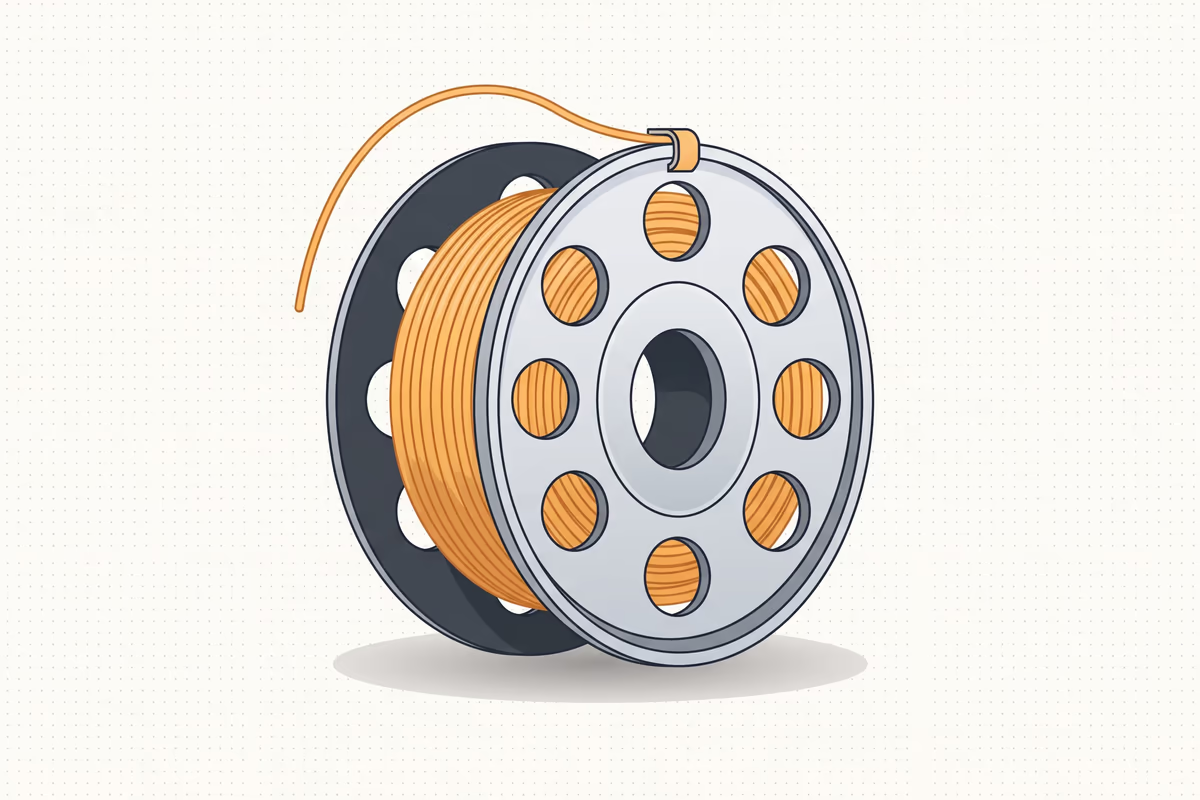
Which 3D printing material should you choose? Not the most popular one, but the right one for how the part will be used. In short: PLA for aesthetics and indoor parts, PETG for everyday use and humidity, ASA for outdoors and sunlight, ABS for light mechanical work, nylons and carbon-fibre composites (PA6-CF, PET-CF) for load and heat, TPU for flexible parts, PC for impact and transparency, PPS-CF for chemicals and extreme temperatures. Below you'll find the use-to-material table and which of our 17 materials fits each need.
In short
- Choose based on real-world use, not trends: what matters is operating temperature, type of stress and environment.
- Aesthetics and indoor parts PLA, everyday use and humidity PETG, outdoors and sunlight ASA, light mechanical parts ABS.
- Load and heat: nylons and carbon-fibre composites (PA6-CF, PET-CF). Flexible TPU, impact and transparency PC.
- Temperature is the first filter: PLA gives way at 55°C, ASA holds up to ~100°C, technical CF composites reach up to 264°C (HDT).
- Extreme chemicals and hydrocarbons PPS-CF; everyday chemicals PETG.
The rule: choose based on real-world use, not trends
Almost every guide compares PLA, PETG and ABS in the abstract. But the right question isn't "which one is best", it's "what does my part have to withstand". The three parameters that almost always decide are operating temperature, type of stress (rigidity, impact, fatigue) and environment (sun, humidity, chemicals). From there the material almost picks itself.
Which material for each use? The table
| You need a part that is... | Material | Why |
|---|---|---|
| Aesthetic, for indoors, a visual prototype | PLA | Easy, precise, lots of colours. Not for load or heat. |
| For everyday use, containers, in contact with humidity | PETG | Tough, good chemical and moisture resistance. |
| For outdoors, exposed to sun and weather | ASA (or ASA-CF) | Excellent UV resistance, doesn't yellow, HDT ~100°C. |
| Mechanical, functional, technical housings | ABS | Decent impact and heat resistance, easy to post-process. |
| Structural, brackets, under load | PA6-CF, PA6-GF, PET-CF | High rigidity and strength (carbon/glass). |
| Gears, moving parts, under fatigue | PA6-CF (nylon) | Toughness and fatigue resistance, works when hot. |
| Flexible, gaskets, shock-absorbing | TPU 95A | Elastomer, absorbs impacts and vibration, resists abrasion. |
| Hot (near engines, strong sun) | PET-CF, PA6-CF, PPA-CF, PPS-CF | HDT from 186 up to 264°C. |
| Resistant to chemicals and hydrocarbons | PPS-CF (extreme), PETG (everyday) | PPS-CF handles harsh environments, PETG the common ones. |
| Transparent, optical | PC | Good transparency and high impact resistance. |
| Flame-retardant, electrical | PC-FR | Self-extinguishing, keeps the qualities of PC. |
| Extreme, industrial, aerospace | PPA-CF, PPS-CF | Top of the range for rigidity and temperature (over 200°C). |
Why is temperature the first filter?
Before mechanical strength, check the temperature the part will work at. Above the heat deflection temperature (HDT) the material starts to give way under load. Our materials ranked by heat resistance, with HDT at 0.45 MPa from the Bambu Lab technical data sheets (2026):
| Material | HDT | Suitable up to |
|---|---|---|
| PLA | 55°C | indoors only, room temperature |
| PETG | 69°C | everyday use |
| ABS | 87°C | warm mechanical parts |
| ASA | 100°C | outdoors and sunlight |
| PC | 117°C | hot components and impact |
| PA6-GF / PA6-CF | 182-186°C | hot zones under load |
| PAHT-CF / PET-CF | 194-205°C | structural high temperature |
| PPA-CF / PPS-CF | 227-264°C | extreme, industrial |
A concrete example, and the case we see most often in quotes: a part left in a car in the sun can exceed 70°C inside the cabin, well beyond the HDT of PLA. There you need at least PETG, better still ASA or a nylon.
The right material for the most common cases
- Outdoors, sun, weather: ASA is the go-to choice for UV and weathering: according to 3DXTech it keeps its colour and mechanical properties outdoors, while ABS yellows and becomes brittle. For outdoor parts under load there's ASA-CF. PETG handles humidity but suffers under prolonged UV, and PLA degrades outdoors.
- Load and mechanics: for brackets, mounts and structural parts, filled composites win — PA6-CF and PET-CF for rigidity and strength, ABS-GF and PA6-GF for dimensional stability. On the numbers: PA6-CF and PPA-CF reach 150-208 MPa in flexural strength in the Bambu Lab technical data sheets, several times what a PLA can do.
- Gears and moving parts: nylon (PA6-CF) withstands fatigue and friction better than anything else, and works even when hot. The typical case is the wheel or gear of an appliance you can no longer find: how to remake it is explained in out-of-production spare parts with 3D printing.
- Flexible: for gaskets, wheels, soles and dampers, TPU 95A is the only elastomer in the range.
- Chemicals and hydrocarbons: for petrol, solvents and aggressive environments PPS-CF is the top choice, while PETG is fine for everyday chemicals. Avoid PLA and ABS for prolonged contact.
- Flame and electrical: PC-FR is self-extinguishing, for enclosures and at-risk applications.
Two questions that always come up: food and humidity
Food contact. PLA and PETG are non-toxic as base materials, but FDM printing has a physical limit: between one layer and the next there are micro-grooves where water stagnates and bacteria proliferate, and the nozzle can release residues from previously printed materials. In practice: fine for brief contact and dry food (a tea-bag holder, a scoop for coffee beans), not for cutting boards, water bottles or dishes that need washing. If food contact is a real requirement, you need certified filament and a surface treatment: mention it in the quote and we'll assess the case together.
Nylon and humidity. Nylon (PA) is the toughest material in the range but it's hygroscopic: it absorbs moisture from the air, and a PA6 part left in a humid environment swells slightly and loses stiffness. The filled versions (PA6-CF, PA6-GF) greatly reduce the effect, which is one of the reasons why in practice those are almost the only ones used. For parts that are submerged or constantly wet, the safest choice remains PETG or PET-CF, which don't mind water at all.
How much does the material affect the price?
Less than you might think, as long as you stay in the commodity range: PLA, PETG, ABS and ASA sit at 15-50 euro/kg of filament, and on the finished part the difference is a few euros. The real jump is towards the composites: carbon-filled spools run from 30 to over 100 euro/kg, and on the finished part a PA6-CF costs 3-5 times a PLA, partly because it wears out nozzles and machines faster. The practical rule: pay for the technical material only where it's really needed (heat, load, outdoors); for everything else a PETG does the job. The details of how the price is built up are in how much 3D printing costs.
The four families in brief
Our 17 materials fall into four families: base and technical polymers (PLA, PETG, ABS, ASA, PC), glass-filled (ABS-GF, PA6-GF: rigidity at a contained cost), carbon-filled (maximum rigidity and heat resistance, from PLA-CF to PPS-CF, with PAHT-CF for continuous heat) and elastomers (TPU, flexible). Full technical data sheets and prices are in the materials guide.
Still not sure which one to choose?
If in doubt, describe how the part will be used (where it goes, what it carries, at what temperature) and we'll recommend the right material. In the instant quote you can also leave the choice to us: upload your file (here's how to prepare it), tell us the use and we'll propose the most suitable material, with the price. And if the part goes into series production, the material is chosen only once: see how contract 3D printing works. Better the right choice than the most expensive one.
MB
Marcello Billi — technical lead ForgeCore
Materials tested on customers' parts, not just on datasheets: if your case isn't in the table, write to me.
Upd. 08.20.2026
Frequently asked questions
What is the strongest 3D printing material?
For mechanical strength, nylons and carbon-fibre composites are the strongest: PA6-CF and PPA-CF reach 150-208 MPa in flexural strength. For combined resistance to chemicals and high temperatures the benchmark is PPS-CF, which works up to an HDT of 264°C.
Which 3D printing material withstands sunlight and outdoor use?
ASA is the best choice for outdoor use: it has excellent resistance to UV rays and weathering, doesn't yellow and holds up to about 100°C. PLA degrades and warps outdoors, so avoid it for exposed applications.
Which material for a part that gets hot or must resist heat?
It depends on the temperature. Up to ~87°C ABS is enough, up to ~100-117°C ASA or PC; beyond that you need nylons and composites: PA6-CF and PET-CF withstand 186-205°C, PPA-CF and PPS-CF exceed 220°C. Always check the material's HDT against the operating temperature.
Which material for a gear or a mechanical part?
For gears and parts under load and fatigue, carbon-fibre-filled nylon (PA6-CF) is the best choice: it combines toughness, wear resistance and heat resistance. For pure dimensional rigidity, PA6-GF and PET-CF also work well.
Which material resists petrol and chemicals?
For hydrocarbons, solvents and aggressive chemical environments, PPS-CF offers the highest resistance. For everyday chemicals (water, detergents, light oils) PETG is enough. PLA and ABS are not suitable for prolonged contact with fuels.
Is PLA suitable for outdoor use?
Only for short, load-free exposure: PLA tolerates the occasional outing outdoors, but it already warps at around 55°C and UV rays degrade it over time. For a real outdoor part, go with ASA or PETG instead.
Are PLA and PETG safe for food contact?
With caution. PLA and PETG are non-toxic as base materials, but an FDM print has micro-grooves between the layers where bacteria settle, and the nozzle can release residues. It's fine for brief contact and dry food; for true food-contact use you need certified filament and a surface treatment, and the part must not go in the dishwasher.
Does 3D printed nylon suffer from water and humidity?
Nylon absorbs moisture from the air: a PA6 part in a humid environment swells slightly and loses stiffness. The carbon- or glass-filled versions (PA6-CF, PA6-GF) greatly reduce the effect. For immersion or constant water exposure, PETG or PET-CF are better choices, as they are unaffected by moisture.